
Search Gallatin Property Tax Records
Gallatin Property Tax Records are tied to Sumner County assessment data and the city tax page that lists the local rate, due date, and relief options. That means Gallatin users should think in two steps. First, find the parcel and assessment details. Then read the city bill rules and any tax freeze or relief details that apply to the account. The city page is useful because it gives a direct number and a clear due date. This page keeps the county search and city tax layers together so Gallatin Property Tax Records are easier to search and easier to follow.
Gallatin Property Tax Records Facts
Gallatin Property Tax Records Search
The main city source for Gallatin Property Tax Records is the Gallatin Property Tax page. The research says the 2025 property tax rate is $0.5295 per $100 of assessed value, taxes are due by February 28, and interest starts on March 1. It also says Tennessee state law does not require mailing tax notices. That makes the city page a good place to start when you need the local billing rules rather than a broad county overview. Gallatin users can see the rate and the due date in one place.
Gallatin Property Tax Records still sit on top of Sumner County assessment data. The county summary page at Tennessee Comptroller county summary gives the county rate context and helps show how city and county amounts combine. If the parcel sits inside Gallatin, the bill reflects both layers. That is why a city search is best read with the county record in view.
The city property tax page behind this image is Gallatin Property Tax, which gives the rate, due date, and tax notice rules tied to Gallatin Property Tax Records.
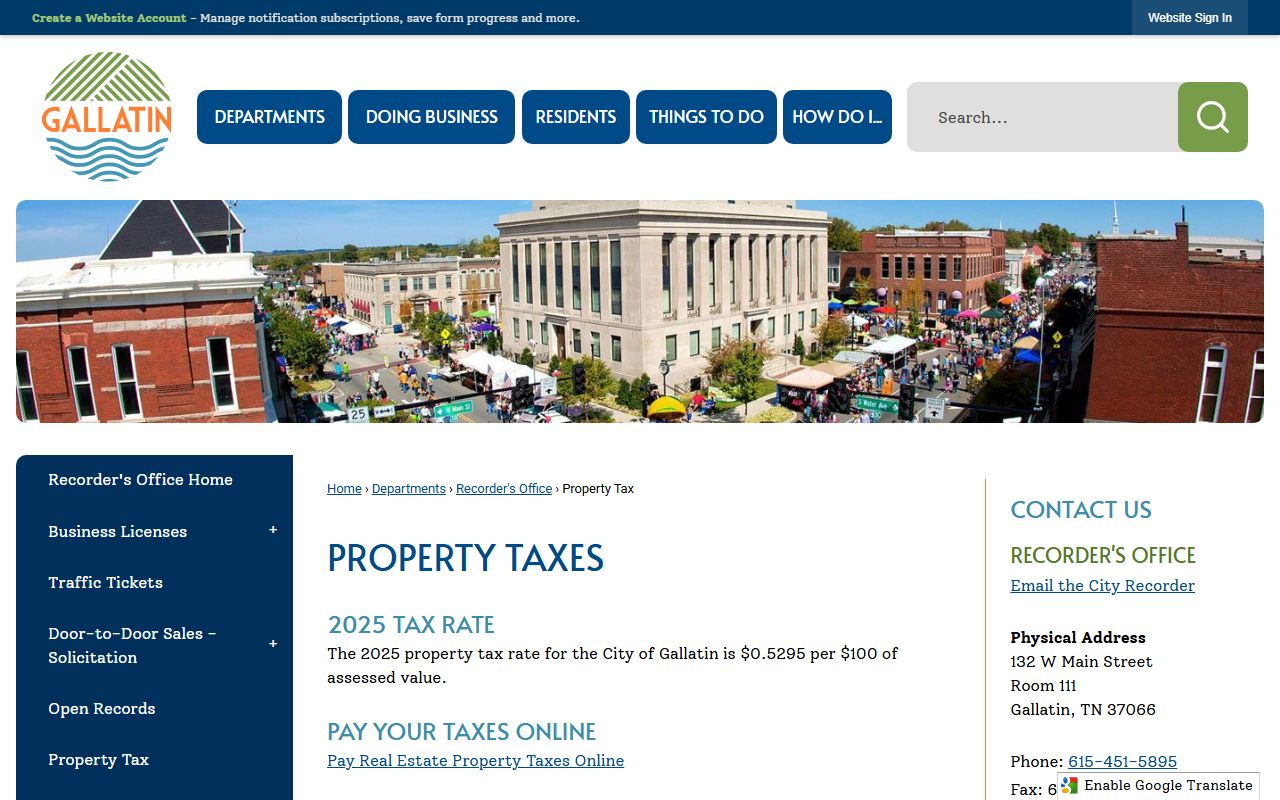
That page is the key city source because Gallatin Property Tax Records need the city rate and due date before the county side makes sense.
Gallatin Property Tax Records County Link
Sumner County is the assessment base for Gallatin Property Tax Records. The county portal at Sumner County TN Real Property Data Portal gives map-based access to assessment and tax data, while TPAD offers the state fallback for a plain parcel search. Those two tools are important when you need to find a parcel before you worry about the city bill. Gallatin records work best when the county parcel and city tax pages are read as one record trail.
The statewide portal at Tennessee Property Assessment Data is especially useful when you want to compare a county result with a second official search. It is a good fallback when the city page gives the rate but you still need the parcel facts. Gallatin Property Tax Records are more readable when the county portal and the state portal are checked together.
The city homepage behind this image is www.gallatintn.gov, which gives local context for Gallatin Property Tax Records even though the county assessment system still drives the parcel record.
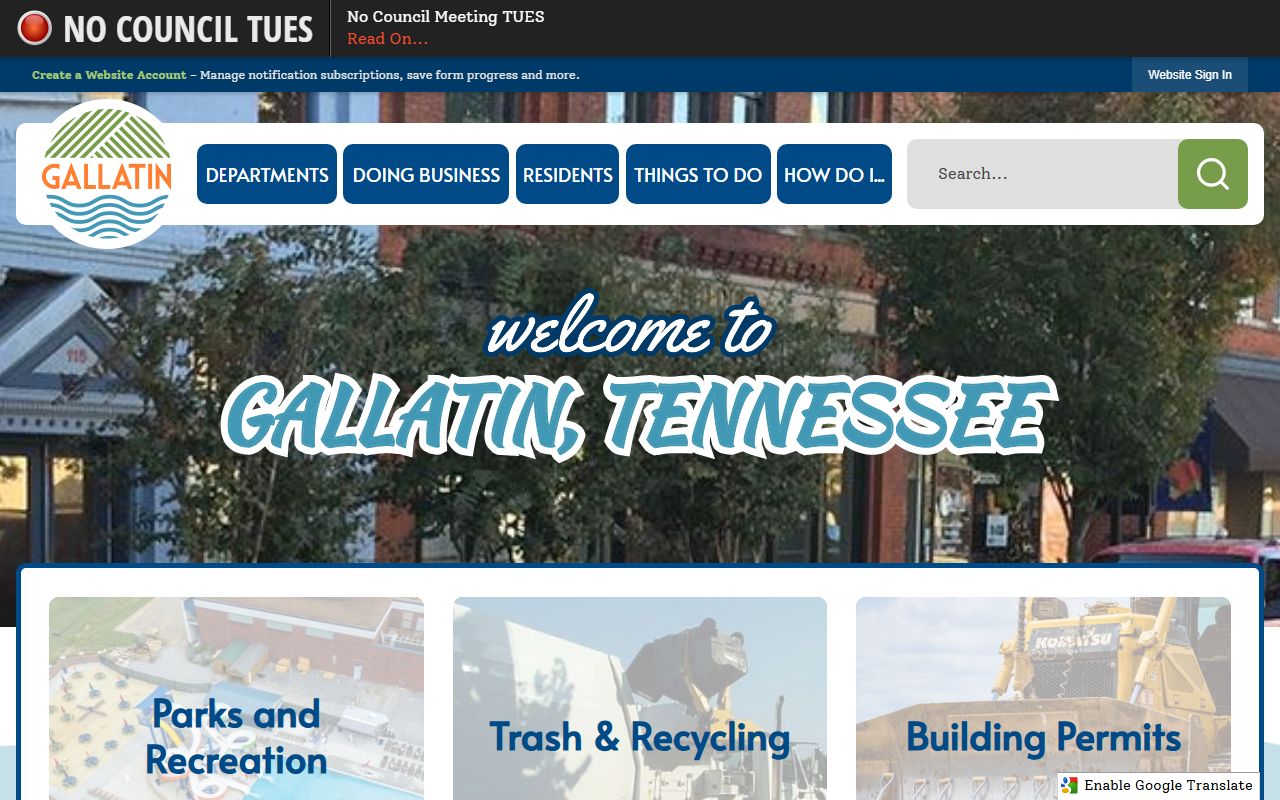
The homepage image adds the city context, but the actual tax record trail still starts with the county parcel search and the city tax page together.
Gallatin Property Tax Records Relief
Relief is a central part of Gallatin Property Tax Records. The city page says a tax relief program is available for elderly, disabled, and disabled veteran homeowners. It also says applicants must recertify each year with Sumner County Trustee's Office for the tax freeze program. Those details matter because relief is not just a general concept in Gallatin. It has a real annual step, and the trustee office is part of that step.
That means Gallatin Property Tax Records are useful beyond basic bills. A homeowner can check the city page, confirm the county parcel, and then see whether relief or freeze recertification is due. If a property owner forgets the recertification step, the tax freeze can lapse even if the parcel itself has not changed. The city page makes that process visible in a very practical way.
The county relief context from Sumner County also matters. The county summary page and the state portal together give the broader tax picture, while the Gallatin page gives the city-specific relief process. That combination is what makes the local record trail complete.
Gallatin Property Tax Records Payments
Payments are straightforward once the bill is right. Gallatin Property Tax Records are due by February 28, and interest starts March 1. Because state law does not require tax notices to be mailed, users should not wait on paper mail alone. The city page is designed to show the key dates directly, which helps owners keep the account current even if a notice does not arrive the way they expect.
In practice, the best way to use Gallatin Property Tax Records is to confirm the parcel on the county portal, read the city rate, and then check whether a relief or freeze program applies. That sequence is simple and avoids confusion. A tax bill can look small until the wrong year, wrong parcel, or wrong relief status is applied to it. The Gallatin page gives enough detail to keep those mistakes from happening.
Note: Gallatin Property Tax Records should be checked against both county parcel data and city relief rules before a payment is made, especially when a freeze recertification may be due.
Gallatin Property Tax Records Help
Gallatin Property Tax Records are easiest to use when the city and county pages are treated as a pair. Use the city property tax page for the rate, due date, and relief rules. Use the county portal for the parcel and assessment record. Use TPAD when you want a state-level fallback. Use the county summary page when you want the local rate context. That gives you a clean path through a city record that can otherwise seem split across several offices.
Because Gallatin is one of the bigger Sumner County cities, it is a good example of how a municipal tax page and a county assessment record work together. The city page says what the taxpayer owes. The county tools explain how the parcel was valued. Gallatin Property Tax Records make the most sense when both pieces are in front of you at the same time.
Useful official links for Gallatin Property Tax Records include the city property tax page, the county property data portal, the state assessment portal, the county summary page, and the city homepage.